
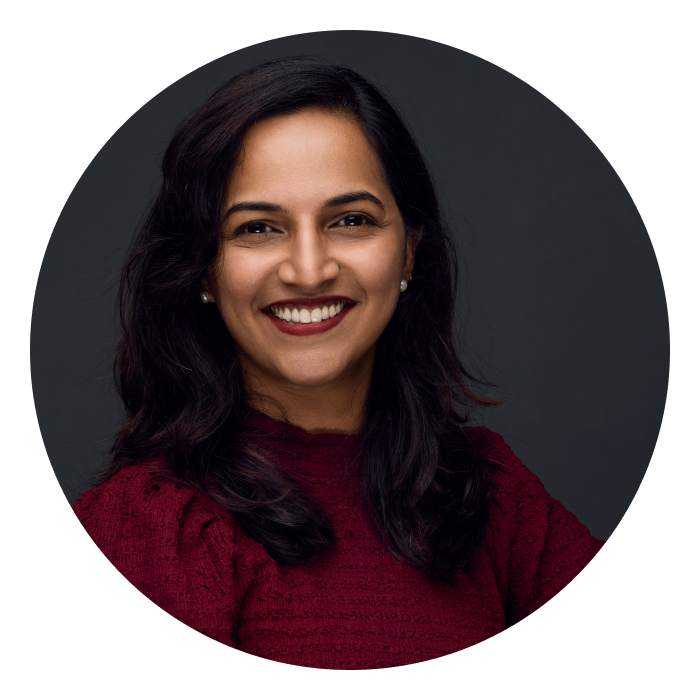
Ramya is a Lead UX/UI Designer with 8+ years of experience designing and delivering user-centered products. She combines her background in art and engineering with a passion for accessibility, research, and rapid experimentation to create meaningful digital experiences.
Ramya has led design efforts across multiple products and teams, focusing on growth-driven design, hypothesis testing, and collaboration within agile environments. She believes the best outcomes come from continuous learning, sharing knowledge, and balancing user needs with business goals.
Highchairs, toilet training and human-centered design: A parenting parallel to UX design
Parenting a 3-year-old Indo-Kiwi child validated the foundations of what I knew about UX design.
This talk shares how everyday parenting moments like potty training and teaching independence, became a playground for validating design principles.
It’s a reflection on what “UX mindset,” means to me and how parenting in Aotearoa helped me rethink how we design for people.
Talk transcript
Introduction
Tēnā koutou katoa!
I knew what Siena was going to say, but it still sounds flattering when it comes to this mic.
And I hope I do justice for that.
Well, I'm Ramya Ravishankar, and I would like to thank Tech Rally for giving me my very first stage to talk in front of such a good audience who are quite interested by the topic.
So I'm hopeful that I can do justice to the pitch.
Can I see by a raise of hands how many parents we have in this room?
OK, at least some of you can relate to me.
And I hope that this works.
Well, when this picture was taken, it was a complimentary headshot that Profile Photos had offered as a sponsor.
I was quite nervous to go into that room.
But then I remembered I was just going to be myself.
And then it turned out so perfect that I can't recognise myself in this picture, because this one has been on my LinkedIn for three years.
And it's actually a cropped photo of my maternity photo shoot.
It's not even a professional headshot.
I was eight months pregnant.
And I was so uncomfortable at the time.
I couldn't walk properly.
I couldn't even sit and relax on the bed.
I was waiting to give birth.
I was like, get out, when she was late.
My daughter was late.
But I remember how pampered I was.
And I cherished my journey as a parent, because it's been an eye-opening experience for me.
And it's grown me as a human and as a professional, which is what I'm going to talk about. How I could relate to being a human-centred designer just by being a parent, and how human-centred design gave me a powerful tool for parenting.
Two sides of the same human
Well, this is me.
And like Siena mentioned, it's one of my sketches.
On one side, I am the lead UX/UI designer of my wonderful team who are here today at the Ministry of Education.
I thought you'd cheer.
And most of my days are about stakeholder engagement, user research, coming up with user experience strategy, thinking about our users.
And obviously, it takes working with the team to deliver on set outcomes.
But on the other side, I am a parent of a hyperactive three and a half-year-old.
And when I was speaking with one of the other speakers yesterday at a social event, they said, three and a half?
Wow!
I have one & two, and they push our limits.
And that's just an understatement, really, because she's at the stage where she's all about princesses.
She goes to a preschool.
She throws the weirdest tantrums.
But I love her for all of it.
And we had to wait in a queue for three hours at Tokyo Disney Sea last month just to get a glimpse of Elsa.
And she wants to do it again.
I don't know if I have the strength to.
And we dragged a group of 10 people with us to do it for her.
But yeah, she pushes me to my limits.
But I find that both of these sides have been complimenting each other for me, rather than just being a conflict.
Of course, there'll be days where I'd work from home and try to attend a meeting.
And she would want that online presence.
She would just crawl up on me and say hi to my colleagues.
Or when they say hi, she'll just turn away.
From engineering to UX design
And my story starts over a decade ago, when I finished Electrical Electronics engineering as my bachelor degree, completely unrelated.
But back in India, we were trained to be software developers no matter what course of engineering you took.
It might be the similar experience to someone else.
But I decided to join a software development company where I was placed, just like my other classmates.
We were all happy trainees who were doing so well in training.
But being an artist, I couldn't fill my creative cup.
I felt like I was missing something.
And I thought for a second that I could turn my digital art into a profession.
I learned about design.
I am self-taught for most of it.
And I joined as a Graphic Designer intern.
I tried to do things by myself.
And I found that the market was really hard to navigate.
And I didn't want to be just a creative person.
Because I'm an engineer.
I am a developer at heart.
So I chose a field that sounded perfect as a blend of both-- UX, UI design.
It was so fancy at that time, 10 years ago.
That was kind of the introduction of UX, UI design field in India.
And I joined a design school called WebD School.
I started learning the basics of human-centred design.
And the more I learned about it, I was super interested in some of the concepts, which were closer to understanding the psychology of humans, like being human and knowing human.
And I'm going to show you some of those concepts, which I learned, were later reflected in my life as a parent.
And how I validated them without even realising that I was doing so.
Human-centred design principles
I'm sure some of you can relate to this project structure.
Well, as creators and developers, we tend to refine and keep refining.
We know iteration is key.
But sometimes we lose sight of what we're doing, because we work without feedback from actual users.
That is a layer that some of us would be missing.
And human-centred design taught me to iterate, but with feedback.
Because you don't want to spend days refining the wrong thing, just out of fear of showing a flawed design to your users.
Because believe it or not, users appreciate having their voice, having a chance to actually share what they really feel about that idea.
Put the donkey at the last.
Again, as developers or creators or designers, we tend to sometimes be married to our designs.
And we create an invisible bias.
Because with as much as technology has got to offer, we get derailed from the actual purpose.
And we think about what is a solution that we can build that can have all these features.
So in the end of the day, we're just developing features on top of features.
And it just becomes a big mixer.
And we move away from the big why.
So trying not to get married to our designs, and not making assumptions, or even not underestimating our users might help.
And probably the one thing that can help with it is having some empathy.
And empathy is a hard to define concept, and even harder as a skill to practice.
But if you once start thinking about what is the problem that I'm solving, not just about the problem that you're solving, but what is triggering the user to need this in the first place?
What is their job to be done?
Why are they doing this?
And how are they going to use it?
That would shift our perspective.
And you can't unsee it.
When you start doing that in practice, you will never be able to go back to problem definition and then list of solutions.
Because now you have multiple opportunities.
You're not thinking about building this one tool that can do it all for 10 different users.
You're thinking about that one user who was actually trying to open a can in the first place.
Is that a bottle opener?
Yeah, maybe just a bottle opener.
Yeah.
But yeah, I learned it all.
Becoming an Indian parent in New Zealand
And then I graduated.
And I had this countdown: three jobs, two countries, and one COVID later - I became a mother.
So I moved to New Zealand six years ago.
I am still an Indian, but I'm about to get my-- New Zealand nationality right now.
But my daughter, she was born here and she's Kiwi.
So I explain the situation as a Kiwi growing in an Indian household.
So as a mother, I had a lot to think about.
As a first time parent, even more so.
And my mom used to mock at me that I'm a Google parent.
I used to Google literally every question that I had right from day one of my pregnancy.
And I would ask 1,000 questions.
Anyone who knows me knows that I would be the first one to raise my hand to ask a question.
So I would be blasting all of the questions at them, let alone Google.
So at that time, I wanted to be planned and organised for this big change that was coming at me.
And it was not the fear of the change itself.
It was the exposure, the speed at which it was going to come at me.
And as a mother, it's even worse.
Like, not genetically speaking as a parent, but there's just so much that's going to happen to my body and mentally.
And my time is all going to be about my child.
So I wanted to find ways where I could keep that sense of control.
And I had a few things on my bucket list.
One was that I grew up watching my single parent and that independence.
I got inspired by the independence and I wanted to foster that independence in my child.
I was hunting for methods and, you know, like Montessori education, a lot of toys and tools with which I can foster that independence in my child.
And the second thing was that I was a very picky eater.
As a child, I hated food.
But as I grew up, I loved food.
But as much as I loved it, I grew a lot of intolerances.
So I couldn't have it.
I didn't want to create a scenario where my daughter would be like some other kids, not to blame anyone, but some other kids who are just distracted by screens or anything else to get that food down their throat.
I wanted her to enjoy that experience.
And I heard about Montessori-led baby-led weaning.
And disclaimer, I'm not here to give parental advice or to advise on any of these specific methods.
I'm just sharing my personal journey on how I went to achieve these goals on my bucket list.
Project 1: sleep training
So I started off with my first project, sleep training.
As much as it sounds like a military training, it is close to one.
I spoke with my cousin who recommended that she had tried sleep training with her child.
And sleep training is nothing but training your child to fall asleep on their own.
And she recommended this book to me.
I read the book.
I went on to online resources.
I knew some of the methods by heart.
I knew exactly what I needed to do.
I thought I wanted to be this parent who is in one of those success stories, the case studies that come out from the book that they practiced it.
They're so free.
They're in control.
And they're not controlled by the sleep routine of their child anymore.
So it was three months postpartum.
And no matter what method I tried, I was just broken down emotionally because I couldn't hear my daughter cry.
All of these methods needed to go through that.
But I just found that it wasn't right for me.
Personally, leave all the books aside.
Leave all the success stories aside.
It wasn't right for me or my child.
I was trying to be this model parent that I had created in my head.
What do I know?
I was a great parent before I actually became one.
So I didn't realize that I was losing the concept of why I was doing this in the first place.
So I quit.
And our current sleeping situation is like this.
It's been like that for three years.
As an Indian parent, it's quite natural for us to co-sleep.
I grew up like that.
All my cousins do that.
But right from day one, I had the fear that I was going to squish my baby if she was sleeping next to me.
I knew that it could happen because I was quite a deep sleeper.
But who knew that I would lose all that sleep and I still haven't slept through the night for days?
And at one point, I thought I was putting on a bassinet or a crib.
And she's going to sleep through the night.
But then I saw her crawl to our bed and she would be waking up in a weird position like this even today.
But I'm happy.
I'm happy that I chose the decision just for us.
Project 2: introducing solids
So I moved on to the second thing.
I was energised by all that.
OK, I've learned my lessons.
I'm not going to go by the book.
But I joined a webinar that my friend who's a Montessori educator in Chennai conducted online.
And I joined the webinar.
I joined all of the online communities.
I did that drill again.
But this time, there was another challenge that our family was here.
And I was breaking generations of stereotypes of traditional methods of how I needed to introduce solids to my child, in what order, at what month, and all that.
But I kind of compared this to a situation where I would have a very difficult stakeholder to convince.
So I chose some methods that would be suitable.
I was building that trust with them.
I was making them feel comfortable about the change.
Because I'm a traditional person myself.
I didn't want to-- I wanted to balance it out.
I didn't want to hurt anybody's feelings.
It's a family unit for a reason.
So this time, I went back to my basics.
Beyond those challenges, I created a big spreadsheet.
Like I mentioned, I'm planned and organised, and by that, I mean I have a lot of Excel sheets with a lot of checklists on them.
And I did routines.
Like I had to stop feeding her milk and start with the solids.
I'm not going to go into too many details about what sort of food I tried.
But I had to test every step of the way.
Like what would work?
High chair, low chair, bib, cloth bib, silicone bib?
There's just so many choices to make.
What sort of cutlery?
I can see some nods.
So I'm thinking that I was on the right track.
I wasn't overthinking it.
Like there was silverware.
There was like silicone cutlery.
And I would spend hours and hours preparing food just to see her throw away.
Because she didn't know the concept of food.
And that was what this was about.
I was introducing that concept to her slowly, gradually, and by taking her response into account.
Like I would videotape each food.
You should have seen her eat a strawberry.
It was so fun.
But after months of doing that, she has been like this ever since.
Like she's enjoyed food.
She loves food.
And we love that about her.
And the same people who doubted us have been recommending this method to other people.
And again, I'm not here to give parental advice.
But I did this because it was the best for us.
And I tested every step of the way without even realising that I was doing human-centred design.
And when I came to my new work after my maternity break, I didn't feel like I had a break.
I had this concept of this talk then.
I found that I was actually considering the feelings of this little human who couldn't even speak just by observing her reactions to every single thing.
And I was making those decisions for her.
So I had this newly found sense of empathy, which kind of enabled me to be a better professional.
It was all invisible.
So I'm not saying I had this on my resume or I ticked a few boxes.
It's just that it came to me naturally.
And I thought, whoa, I'm a parent.
And now I'm a better designer.
And I forgot how I was before because it's just become a tendency.
And I'm not thinking about a model parent.
I'm not even comparing myself with other parents.
Project 3: toilet training
So with that, I moved on to project three.
Well, fostering independence was definitely still on my list.
And obviously, baby-led weaning was one of the methods.
But I found that Montessori education was being provided in Wellington.
And I should choose that.
So I chose to enroll in a Montessori preschool where their condition was that she needed to be toilet-trained.
Now, I had this gap between two years and three years.
So that was one year of time, I thought, whoa, OK, ample amount of time.
I can think this through.
And you might have thought that I had it all figured out because I'm a UX designer.
I'm just thinking about this little human.
But no, because she was two.
And it's called terrible twos for a reason.
Her favourite word in the whole wide world was 'No'.
Do you want this?
No.
Do you not want this?
No.
What should I do?
So this was a big change for her.
It's more harder than it sounds because children transitioning from diapers to toilets, it's like a big step up for them.
They don't even know what a toilet is.
They might feel too shy or some kids might be scared to even sit in a potty.
And I had to think this through.
And I decided to just talk to other parents this time, not go online, not do wide range of research because that could just overwhelm me.
And when I spoke with parents who had done this before and I took the help from her daycare, there was one thing that I noticed.
All kids react differently to the exact same methods.
Sounds familiar?
Yeah, just like our users.
We don't know what they are thinking.
We don't know what's triggering them to do something.
So I thought I should just take a step back.
OK, what are the things that I need to accept if I had to do this in the right way?
One, when should I introduce this change to her?
Because I've got one year of time.
We did a lot of traveling.
And what would motivate her as opposed to what her friends are doing?
Because she's going to react differently anyway.
And I had to test it for myself.
And how do I introduce this change without her hating us in this process?
So my husband and I decided to go into the store and buy a potty stool, which was like this, which is resembling our toilet.
And it had even a flush.
It was just white in colour.
It was plain, nothing fancy.
I knew that if I got her something fancy, she would think that it's a toy and she would just want to play with it.
So she loved pressing the flush.
And then I knew her favourite thing was Alexa.
So we set timers on Alexa.
I hope no one has a voice assistant here that I'm triggering.
But she knew how to stop the timer.
So even though there was a timer, she wasn't in control or we made her feel so.
And she loved Elsa.
So her daycare used to give her stickers if she successfully went to the potty with her friends.
So we bought her a roll of Elsa stickers.
And that was kind of a motivating thing for her.
And I'm not saying it all went smoothly.
But at least she was more comfortable with us trying this very slowly, giving her some rewards in the process.
And you should see her now.
Like she is happily going to this preschool.
She is able to go to the toilet by herself.
She's even that tall that she can just climb on a stool and use a real toilet.
And she's so proud of herself.
She comes back home and tells me, "Mama, I used this big toilet in the school. "Not the small ones, the big ones." So she's so particular that she is proud of her achievements.
And so are we.
And it all happened because I was just listening to her.
It happens to us as parents.
We just don't realize it or put our finger on it yet.
And as parents, we take thousands and thousands of decisions each day.
And we put social norms, peer pressure, competition, everything outside of it.
We just keep them at the core.
We only consider what's best for us as a family unit.
If you're not trying to compromise on anything and I wouldn't say, just let go of your values, just find the thing that works for you.
And if you put the same kind of thought into designing a product, keeping the human in the center, that's one skill I can say for sure that AI can never replace.
Because humans are so unpredictable and we keep evolving.
And if one kid is so different from another and responding so differently to the same exact things that they see outside, how would AI keep up with that?
So the roles will be reversed, us keeping up with AI and AI keeping up with us.
Key takeaways
So to sum it up, don't underestimate the user no matter how small or how big or old, they can be.
Don't make assumptions.
You'll have to iterate, but with feedback.
Just remember that feedback is really important.
Let go of the bias.
And like Norie mentioned this morning, the loudest voice in the room might win.
But if you have evidence, if you're testing through the process, you'd have something to speak up to in whatever form or way that suits us.
Keep the user in the center.
And obviously think about the real human needs behind those problem statements.
Because when we get pages of requirements document, all we do is think about how we design the interface or how is this going to solve the problem overall?
How is our tool going to be?
But remember that there's a human behind that computer trying to use that.
And they're going to be super happy if this whole thing works out for them by knowing that we're observing them.
We're doing what's best for them as designers.
I hope that my story inspired some of you to think that being a parent and being a professional are not two different things because we're the same human made up of these two sides.
And I hope that you realise that you're complimenting it, not conflicting.
I'd be happy to connect on LinkedIn.
There's a link to my portfolio here and my Instagram page for my sketches, which is nothing fancy.
I post very occasionally. It was a thing that I started off when I started being a digital artist.
And the reason the name is Southpaw Sketch Tales is because I'm a left-hander and I like telling tales through my sketches.
I should give credit to my favourite sitcom 'Friends'.
You might have seen the references if you knew it.
And thanks to Gemini and I for helping me create those title cards.
I hope you enjoyed this.
Nga mihi nui! Thank you! Nandri vanakkam!